Author: Dr. Emmanuel
Location: Mexico
Difficulty: Advanced Case
Tooth: Mandibular first molar (36/46)
Introduction
Endodontic retreatment cases involving previously treated teeth often present complex anatomical and restorative challenges. When a patient experiences persistent pain after initial root canal therapy, advanced diagnostic tools such as CBCT become essential to uncover the true source of the problem. This clinical case describes the successful management of a 58-year-old female patient who presented with severe masticatory pain caused by an untreated distolingual canal in a mandibular first molar, complicated by the presence of a threaded metal post.
Patient Presentation and Diagnosis
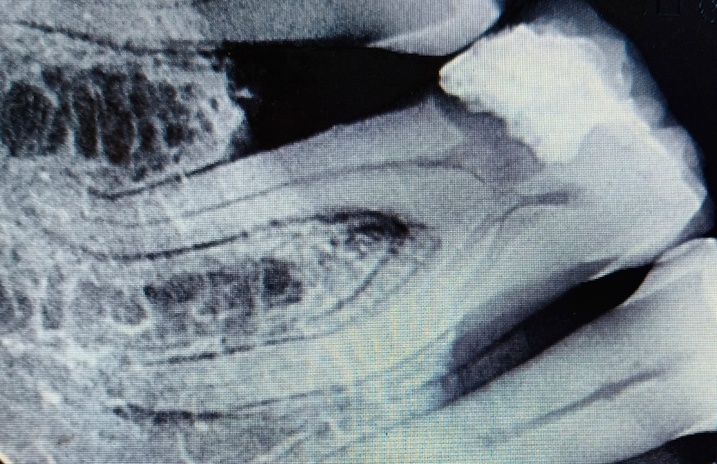
A 58-year-old female patient reported intense pain upon chewing in the area of a previously treated mandibular first molar. Periodontal tissues were healthy. Conventional radiographs alone were insufficient to fully explain the symptoms.
CBCT imaging revealed the critical finding: the distolingual canal in the distal root had remained completely uninstrumented during the original endodontic treatment. This missed canal was identified as the primary cause of the patient’s ongoing pain.
Diagnosis:
Previously treated tooth + untreated distolingual canal
Clinical Challenge
The main technical difficulties in this case included:
- Complete desobturation of the existing root canal filling materials
- Safe removal of a threaded metal post located in the distobuccal canal
- Negotiation and thorough instrumentation of the previously untreated distolingual canal
Preserving as much tooth structure as possible while achieving a predictable outcome required careful selection of instruments and techniques.
Clinical Workflow
1. Diagnosis
CBCT confirmed the presence of an untreated distolingual canal, explaining the post-treatment pain that was not fully visible on two-dimensional radiographs.
2. Access and Desobturation
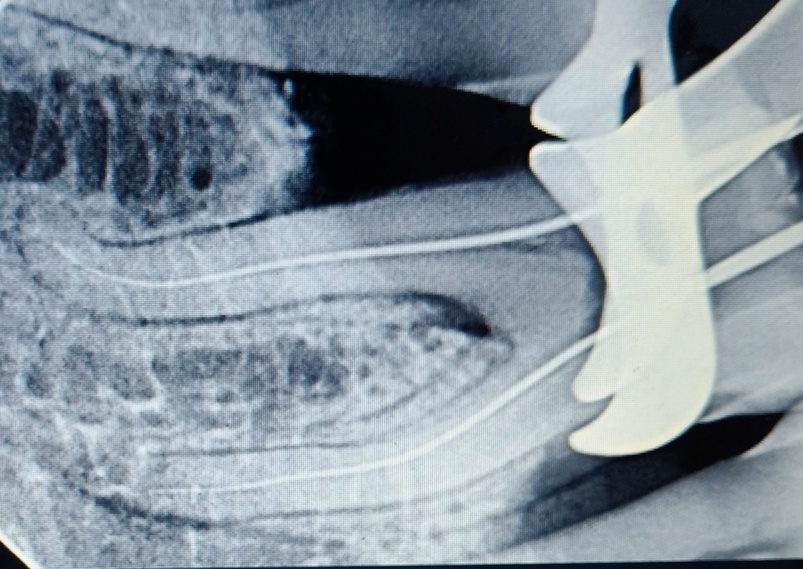
The tooth was re-accessed, and the existing root canal fillings were carefully removed from all canals.
3. Removal of the Threaded Metal Post
The threaded metal post in the distobuccal canal was successfully removed using ultrasonic tips. This approach allowed precise vibration to loosen the post while minimizing unnecessary enlargement of the canal and preserving dentin.
4. Instrumentation
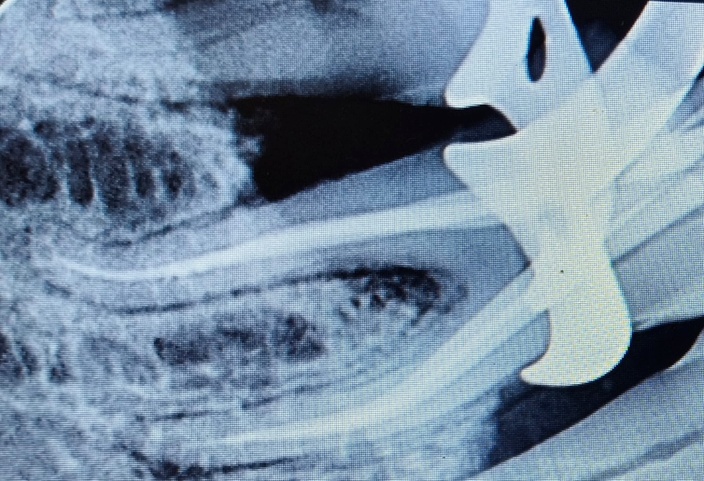
- Initial removal of residual gutta-percha and debris was performed with Rogin Dental retreatment files.
- Subsequent rotary instrumentation was completed using the Ino Shaper Blue system from Rogin Dental, enabling safe and efficient shaping of the canals, including the previously untreated distolingual canal.
5. Obturation
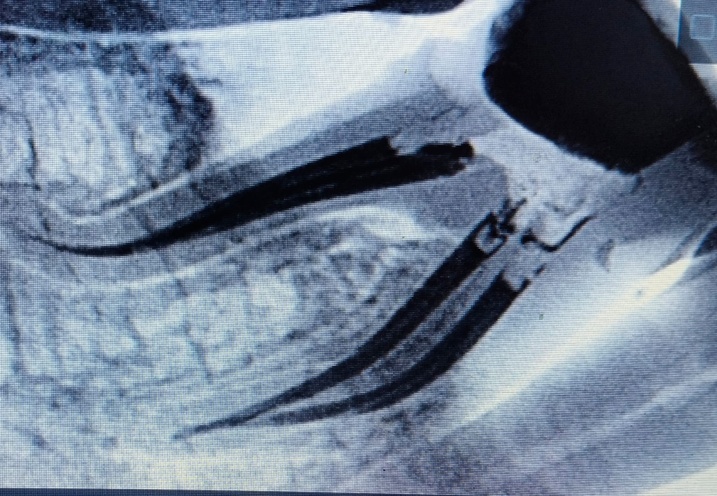
The canals were obturated with a bioceramic sealer in combination with the vertical compaction technique, ensuring a dense and hermetic three-dimensional seal.
Clinical Tips
- CBCT is indispensable in symptomatic previously treated teeth. Anatomical variations such as an untreated distolingual canal are frequently the true source of pain and may remain undetected on conventional radiographs.
- Ultrasonic removal of threaded metal posts helps preserve dentin and avoids aggressive canal enlargement.
- A sequential approach using Rogin Dental retreatment files followed by the Ino Shaper Blue rotary system provides a controlled and efficient pathway for gutta-percha removal and re-instrumentation.
Conclusion
This advanced endodontic retreatment of a mandibular first molar demonstrates the importance of thorough three-dimensional diagnosis and a systematic clinical approach. By combining CBCT-guided diagnosis, ultrasonic post removal, Rogin Dental retreatment instruments, the Ino Shaper Blue system, and bioceramic obturation with vertical compaction, a predictable and conservative outcome was achieved. Addressing the previously missed distolingual canal resolved the patient’s masticatory pain and restored function.
Proper case selection, advanced imaging, and the right sequence of instruments remain key to success in complex endodontic retreatment procedures.