Author: Dr. Abdulrahman Tariq
Location: Iraq
Difficulty Level: Advanced
Tooth: Mandibular molar
Case Overview
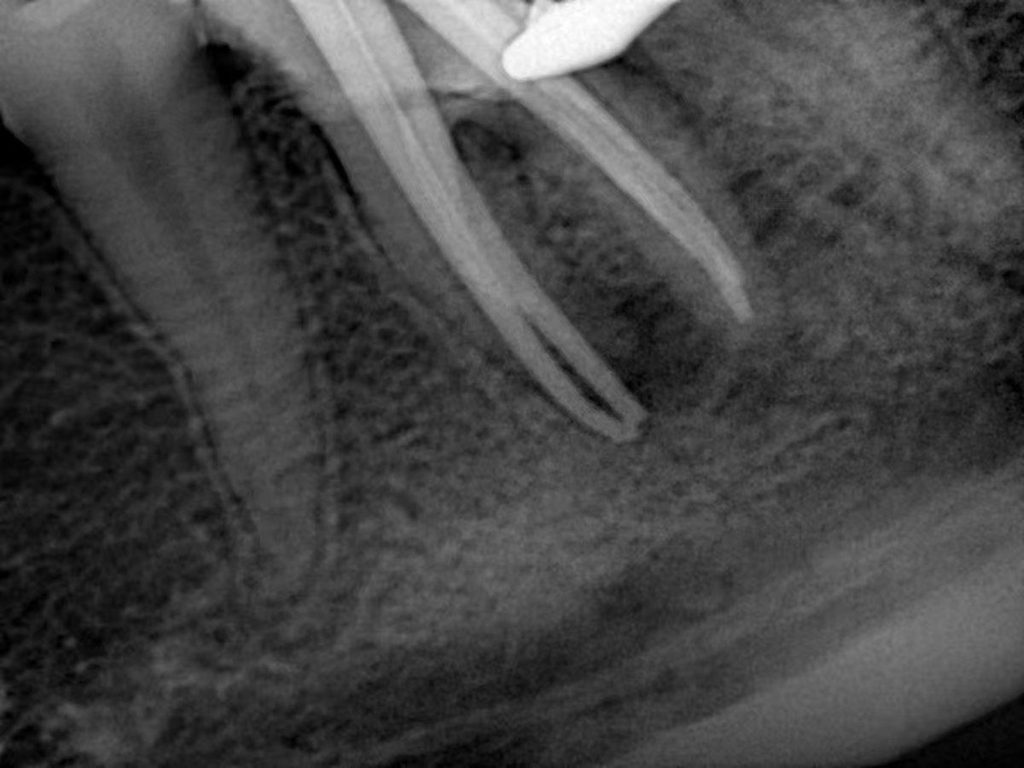
This clinical case describes the successful management of a failed endodontic retreatment involving an iatrogenic apical perforation in the mesial canals of a mandibular molar. The patient was referred after a previous attempt at retreatment resulted in apical perforation, preventing completion of the procedure.
Diagnosis: Failed retreatment with iatrogenic apical perforation
Primary Challenges:
- Apical perforation in the mesial canals
- Apical gauging greater than 50
The treatment goal was to bypass the perforation, restore apical integrity, and achieve a high-quality obturation while preserving as much remaining tooth structure as possible.
Clinical Workflow
The following step-by-step approach was used to manage this complex case:
1. Pre-Endo Buildup
A pre-endodontic buildup was performed to establish proper isolation, create a stable reference point, and facilitate controlled access and instrumentation throughout the procedure.
2. Bypass of the Perforation
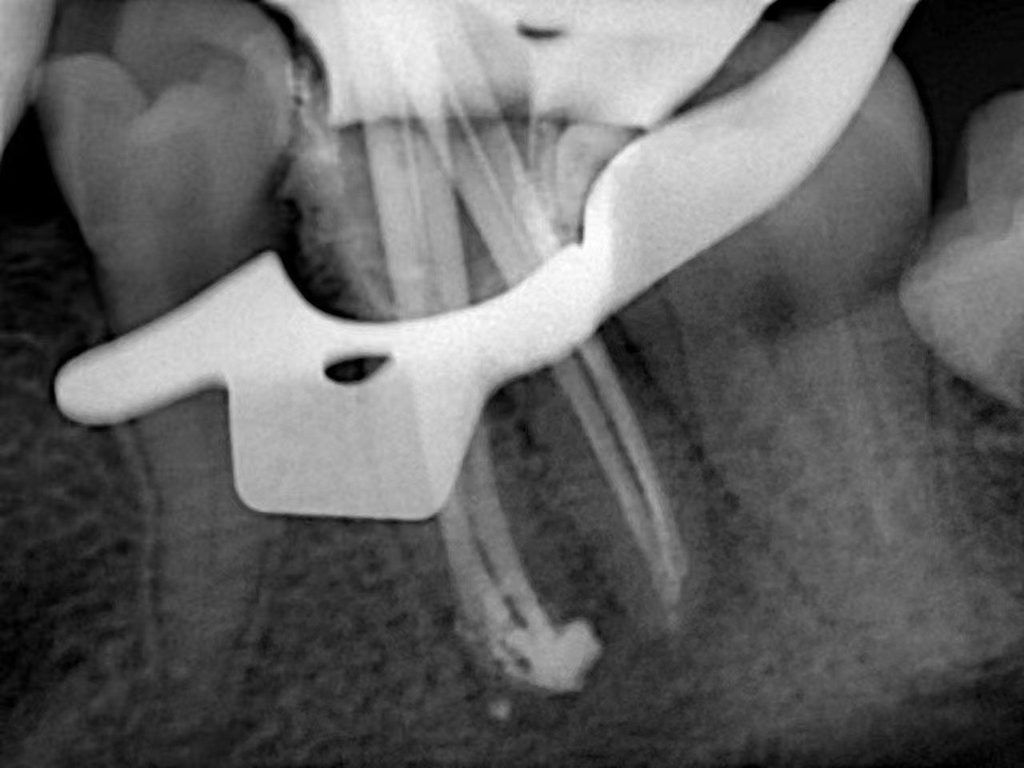
The apical perforation in the mesial canals was carefully bypassed using EZ Shaper Pro. This allowed negotiation of the true canal path beyond the perforated area without causing additional damage to the root structure.
3. Canal Instrumentation and Shaping
After successful bypass, canal shaping was completed using Sup-Taper files. These instruments enabled conservative and controlled preparation of the canal system while maintaining the original canal anatomy as much as possible.
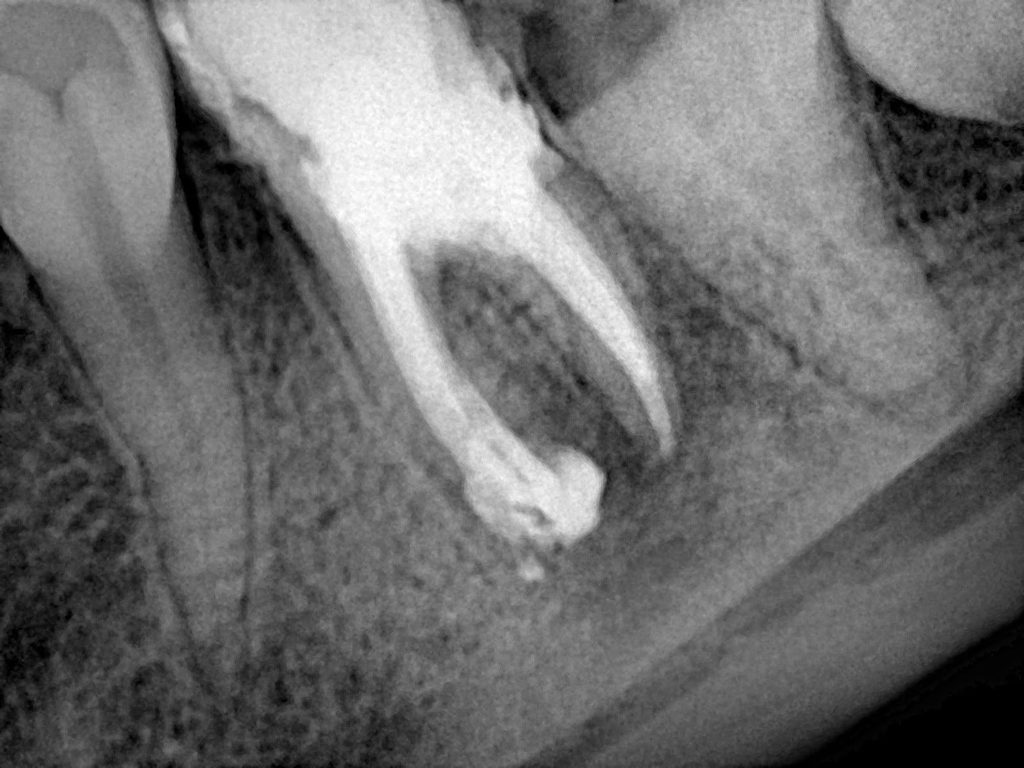
4. Apical Repair and Plugging
Apical plugging was performed to address two critical issues:
- Sealing of the apical perforation
- Re-establishment of an apical stop due to apical gauging exceeding size 50
This step was essential to create a reliable apical barrier before final obturation.
5. Obturation
The canals were obturated using a modified warm vertical compaction technique. This approach provided dense three-dimensional filling of the canal system while ensuring a secure seal at the apex.
Clinical Tips for Managing Similar Cases
- When apical gauging exceeds size 50, apical plugging should be performed prior to obturation to re-establish a reliable apical stop and prevent overfilling or extrusion.
- EZ Shaper Pro proved effective in bypassing the perforation while minimizing further canal damage.
- Sup-Taper files allowed conservative finishing of the canal shape after the perforation had been bypassed, helping to preserve remaining dentin.
Conclusion
This case demonstrates that even complex situations involving iatrogenic apical perforation and excessive apical gauging can be successfully managed with a systematic approach. Careful bypass of the perforation, controlled instrumentation, proper apical repair, and precise obturation techniques were key to achieving a predictable outcome in this advanced endodontic retreatment of a mandibular molar.
Proper case selection, magnification, and adherence to biological principles remain essential when treating such challenging scenarios.