
Dr. Cristian Giucoane, Romania
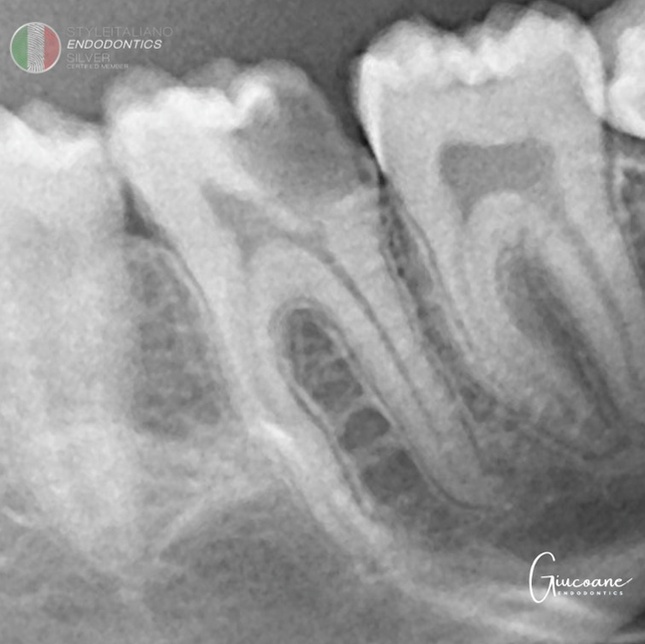
In endodontics, cases involving severe pulpitis combined with apical periodontitis and substantial coronal tooth structure loss present notable clinical challenges. This case report details the effective management of such a scenario on the lower left first molar (tooth #36), highlighting modern techniques and materials that ensure predictable outcomes.
Patient Presentation and Diagnosis
The patient presented to the office complaining of pain while biting and visible substance loss on the lower left jaw. Following thorough clinical examination and radiological assessment, the diagnosis was established as:
- Severe pulpitis
- Localized symptomatic apical periodontitis on tooth 3.6 (#36)
Given the irreversible nature of the pulp inflammation and the presence of periapical involvement, the patient consented to root canal treatment (endodontic therapy). The case was classified as Moderate to Advanced in difficulty, primarily due to the severe substance loss, which necessitated a pre-endodontic build-up for proper isolation and procedural safety.
Clinical Challenges
The primary challenge in this case was the extensive loss of coronal tooth structure. Without adequate build-up, achieving a reliable seal for irrigation and maintaining structural integrity during canal preparation would have been compromised. Proper isolation and a stable foundation were critical for successful endodontic treatment.
Step-by-Step Clinical Workflow
The treatment was completed in a single session with a focus on efficiency, thorough disinfection, and immediate restoration.
1、Isolation and Caries Removal
After rubber dam isolation, all carious tissue was carefully removed along with unsupported enamel to create a clean and stable working field.
2、Pre-Endodontic Build-Up
A pre-endodontic build-up was performed to restore the missing coronal structure. This step was essential for safe and effective irrigation while preventing leakage and procedural complications.
3、Canal Location and Shaping
Root canals were initially scouted using manual files.
Coronal 1/3 shaping: Performed with Recip-One R25 (Rogin).
Apical 2/3 shaping: Completed using Ino-Shaper (Rogin).
This hybrid approach allowed for efficient and conservative canal preparation while respecting the original anatomy.
4、Irrigation Protocol
Thorough disinfection was achieved using:
NaOCl 5.25% (sodium hypochlorite)
EDTA 17% (ethylenediaminetetraacetic acid) Both irrigants were ultrasonically activated, which significantly enhances cleaning efficacy by improving penetration into lateral canals, isthmuses, and the apical delta.
5、Obturation
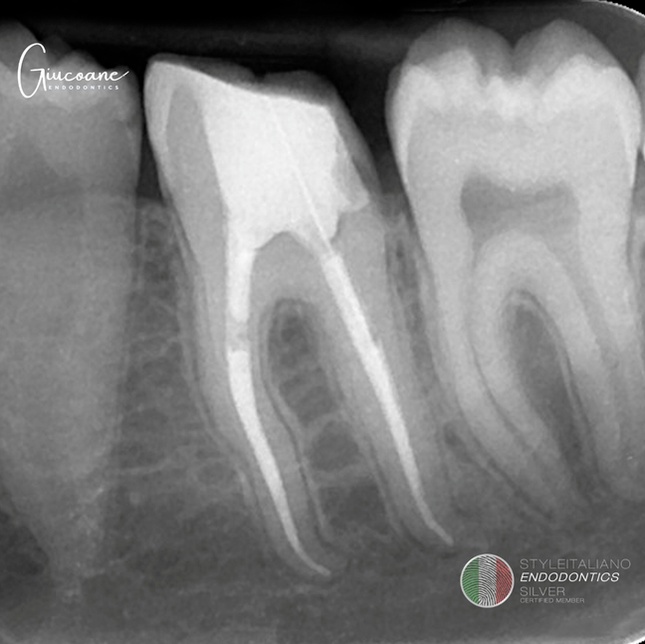
The endodontic system was obturated using the Warm Vertical Condensation (WVC) technique. This method provides excellent three-dimensional sealing and adaptation to the complex root canal anatomy.
6、Immediate Direct Restoration
In the same visit, the tooth was restored using a fiber post and dual-cure composite. This approach restored function and strength promptly while the patient remained comfortable.
Key Clinical Tips for Similar Cases
- Isolation and Pre-Endo Build-Up: A proper pre-endodontic build-up is crucial when dealing with significant substance loss. It ensures a hermetic seal, prevents contamination, and allows for safe ultrasonic irrigation.
- Ultrasonic Activation: Using ultrasonic energy with NaOCl and EDTA maximizes debridement and smear layer removal, contributing to higher success rates in endodontic therapy.
- Long-Term Stability: Even after successful root canal treatment and immediate restoration, cuspal coverage (such as a crown) is highly recommended for posterior teeth with extensive prior damage to protect against fracture and ensure longevity.
Treatment Outcome
The patient reported being completely pain-free following the procedure. Post-operative instructions were provided, including the importance of cuspal coverage for long-term success. The case is currently awaiting recall appointments to monitor periapical healing and overall restoration performance.
Why This Approach Works
Combining modern rotary files (Recip-One and Ino-Shaper from Rogin), advanced irrigation techniques, warm vertical obturation, and reliable restorative materials allows clinicians to handle moderate to advanced endodontic cases efficiently and predictably. Addressing the pre-endodontic build-up early in the workflow was the key to overcoming the substantial substance loss in this tooth #36 case.
This successful outcome demonstrates that with proper planning, technique, and material selection, even challenging root canal treatments involving severe pulpitis and apical periodontitis can yield excellent immediate and expected long-term results.
