Endodontic cases involving mandibular first molars with complex root canal anatomy continue to test the limits of even experienced clinicians. This case report highlights a successful retreatment of a mandibular first molar diagnosed with chronic apical periodontitis due to a previously improper root canal treatment (RCT).
Dr. Mohd Hammo from Jordan shares his clinical experience managing severe curvatures while preserving the original canal anatomy.
Case Overview
Tooth Position: Mandibular first molar
Diagnosis: Chronic apical periodontitis associated with previously improper root canal treatment
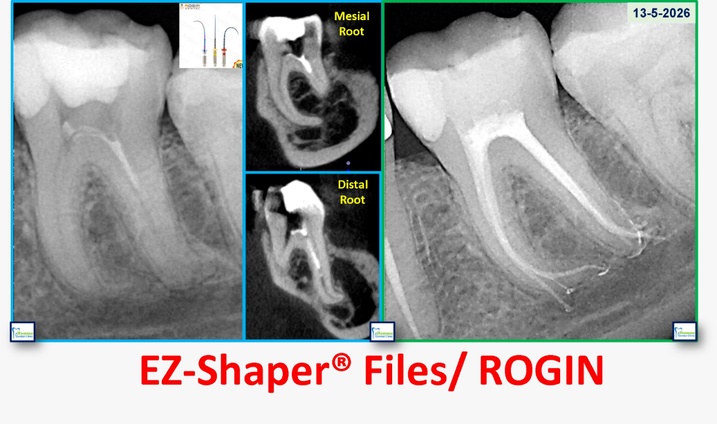
The tooth presented with significant anatomical complexities that dramatically increased procedural risks. The mesial root exhibited severe curvature, while the distal root showed an apical curvature. These features raised the potential for ledging, canal transportation, and file separation during mechanical shaping.
Key Case Challenges
Treating curved canals in retreatment cases requires meticulous planning and superior instrumentation. Severe curvatures combined with complex canal anatomy make it difficult to maintain the original canal path. Without proper technique and tools, the risk of iatrogenic errors increases significantly, potentially compromising the long-term success of the retreatment.
Clinical Tips for Managing Curved Canals
CBCT imaging proved essential before initiating treatment. It provided critical 3D visualization of the root anatomy and canal curvatures, allowing for better strategic planning.
Recommended approaches in such advanced cases include:
- Creating a conservative glide path
- Using gentle file progression
- Implementing activated irrigation
- Avoiding excessive taper to preserve dentin and respect the original canal trajectory
These steps are vital for minimizing procedural errors in severely curved root canals.
Experience with EZ-Shaper Rotary Files
The EZ-Shaper files (Rogin) demonstrated outstanding performance in this demanding case. Their excellent flexibility and cutting efficiency enabled safe, controlled shaping while faithfully respecting the original canal anatomy.
Despite the severe mesial and apical distal curvatures, the system allowed predictable progression without significant transportation or other complications. This highlights the value of heat-treated, highly flexible nickel-titanium systems in modern endodontics when managing complex mandibular molar retreatments.
Clinical Workflow
- Diagnosis & Planning — Comprehensive evaluation with CBCT for 3D anatomical mapping.
- Access & Disassembly — Careful removal of old root filling material.
- Glide Path — Conservative manual scouting to establish a safe path.
- Shaping — Controlled preparation using EZ-Shaper files.
- Irrigation — Enhanced activated irrigation protocol for thorough disinfection.
- Obturation — Complete root canal filling and sealing.
Essential Clinical Tips
- ❗️ CBCT First: Always prioritize CBCT to fully understand root curvature and anatomy before treatment.
- ❗️ Safety First: Employ gentle progression and avoid excessive taper in severe curves to reduce risks of ledging or transportation.
- ❗️ Tool Choice: Select instruments with proven flexibility like EZ-Shaper to effectively manage and respect the original canal anatomy.
Conclusion
This advanced endodontic case demonstrates that with proper preoperative assessment, careful technique, and the right instrumentation, even highly challenging curved mandibular first molars can be retreated successfully. The combination of CBCT-guided planning and the superior flexibility of EZ-Shaper files played a decisive role in achieving a predictable and anatomically respectful outcome.
For clinicians facing similar complex root canal retreatment cases, investing in high-quality flexible rotary systems and 3D imaging can significantly improve safety and success rates.
