Dr. Abdulrahman Tariq
Iraq
Introduction
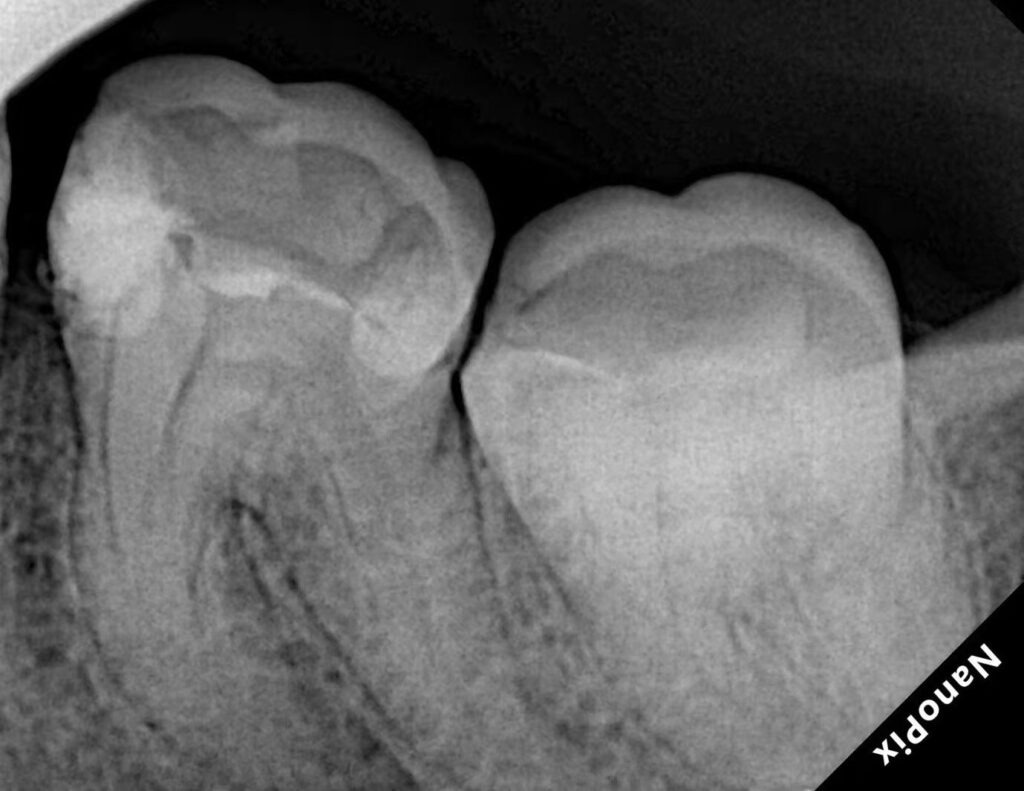
Successful root canal therapy depends on accurate diagnosis, careful canal negotiation, and precise shaping and obturation. This intermediate case involves tooth #46 presenting with unpleasant pain. Diagnosis of acute irreversible pulpitis was confirmed both clinically and radiographically. The case presented a specific anatomical challenge: two joined mesial canals classified as Vertucci Type II.
Case Overview
- Tooth: #46
- Diagnosis: Acute irreversible pulpitis
- Difficulty: Intermediate Case
- Key Challenge: Two joined mesial canals (Vertucci Type II)
The presence of joined mesial canals requires careful negotiation rather than aggressive separation to avoid procedural errors and preserve canal anatomy.
Clinical Workflow
1. Isolation and Access
Treatment began with rubber dam isolation followed by proper access opening. The principle of “access to success” guided the preparation to ensure straight-line access while conserving tooth structure.
2. Coronal Flaring
Coronal flaring was performed to facilitate subsequent instrumentation and reduce stress on the files:
- MB and ML canals: EZX
- Distal canal: Aurora Super Flexi 25/.09
3. Canal Instrumentation
- Mesial canals (Vertucci Type II): shaped to EZ4
- Distal canal: shaped to Aurora 25/.06
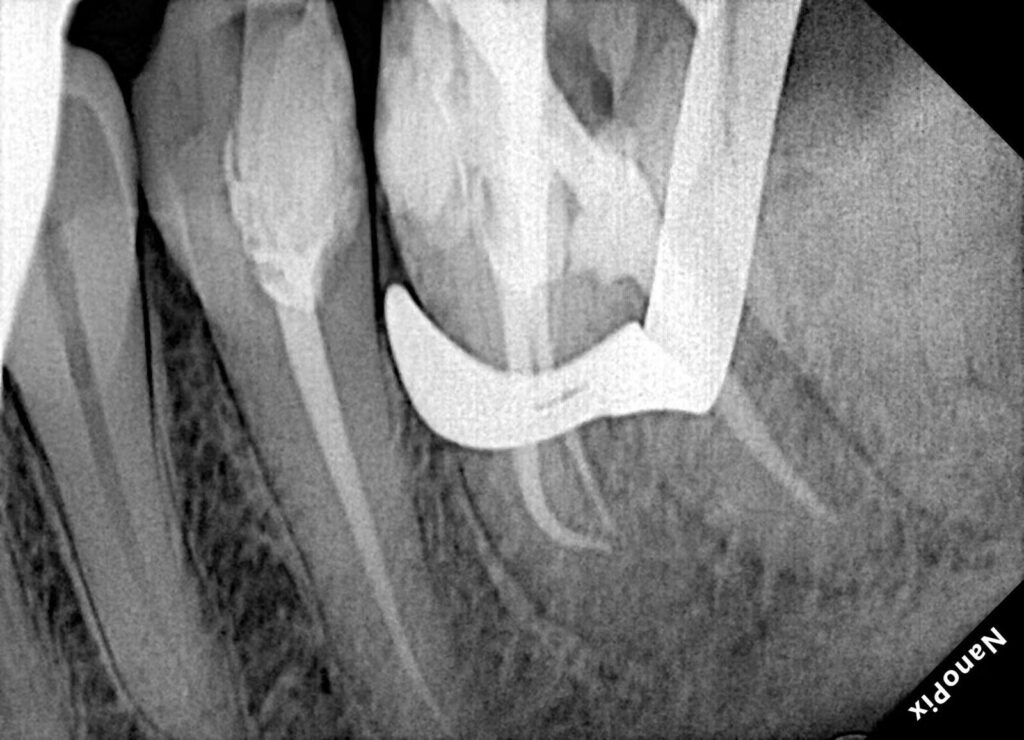
The joined mesial configuration was managed with controlled negotiation to maintain the natural pathway without forced separation.
4. Obturation
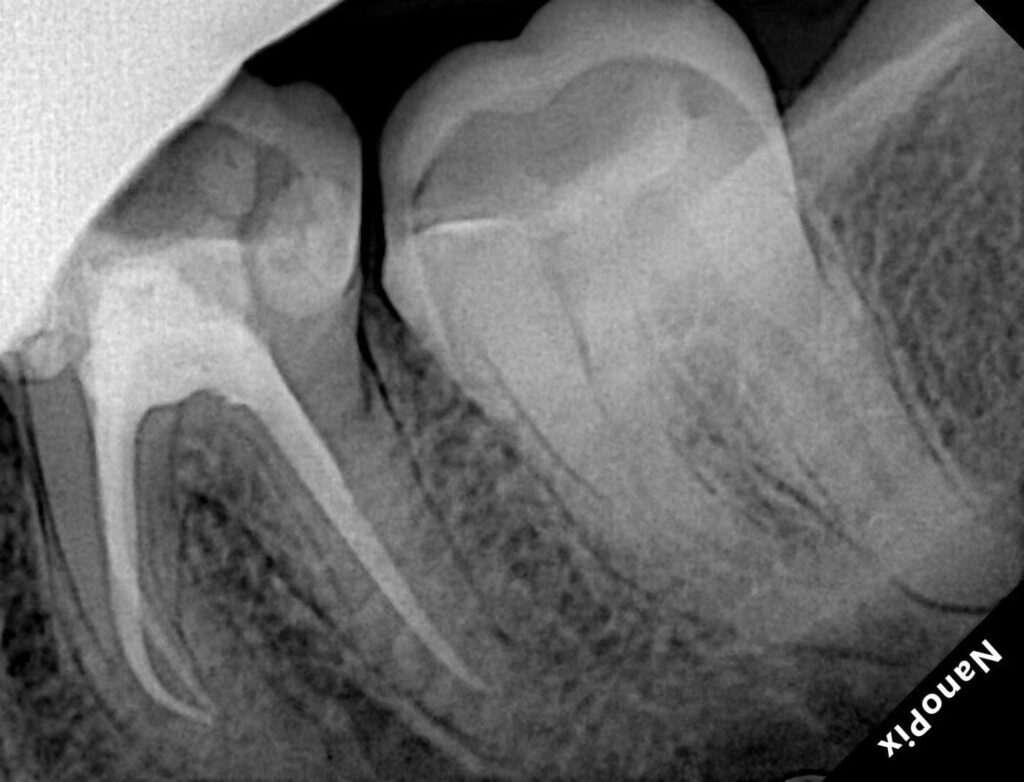
The canals were obturated using the modified warm vertical compaction technique, providing dense three-dimensional fill.
5. Documentation
Clinical photographs were taken using a clear-view mirror for accurate documentation of the completed treatment.
Clinical Tips
- Vertucci Type II anatomy demands careful negotiation of the joined mesial canals. Aggressive attempts at separation should be avoided.
- Using EZX for coronal flaring effectively reduces stress on subsequent shaping files.
- The Aurora Super Flexi system allows safe management of the distal canal with larger taper without compromising flexibility or safety.
Conclusion
This case of tooth #46 with acute irreversible pulpitis and Vertucci Type II mesial canals was successfully managed through systematic isolation, controlled coronal flaring, precise instrumentation, and modified warm vertical compaction obturation. Attention to anatomical detail and selection of appropriate instruments contributed to a predictable outcome. Careful case documentation further supports clinical learning and quality control in endodontic practice.
