Dr.Shakeel Khan
Pakistan
Root canal treatment on calcified canals remains one of the most technically demanding procedures in endodontics. This advanced case from Pakistan demonstrates how careful technique and the right instruments can lead to predictable success even in highly challenging anatomy.
Case Summary
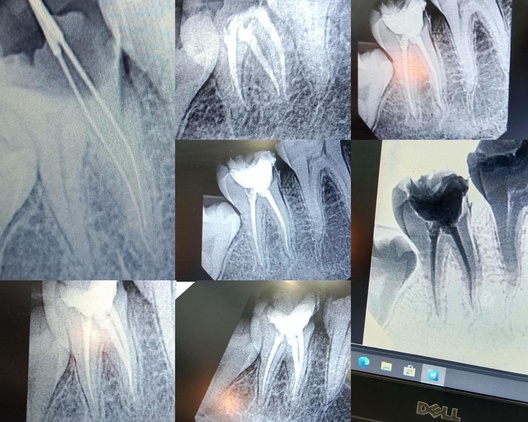
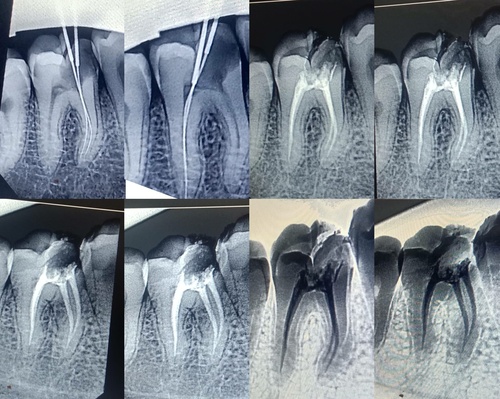
Dr. Shakeel Khan treated a mandibular first molar (lower left first molar) diagnosed with irreversible pulpitis. The tooth presented with severe calcification extending from the middle third to the apical third of the canals, combined with significant root curvature.
Key Challenges:
- Dense calcification blocking canal negotiation
- Severe root curvatures increasing the risk of ledge formation or perforation
- Need to achieve complete cleaning and shaping while respecting the original canal anatomy
Clinical Workflow
1. Initial Negotiation
The procedure began with careful manual scouting using a K-file. This hybrid approach is critical in calcified canals — starting with a small, pre-curved K-file allows safe initial penetration through the calcified zones without deviating from the canal path.
2. Shaping with R-Shaper
Once the canals were negotiated, Dr. Khan switched to the R-Shaper (Rogin) rotary system. The R-Shaper’s combination of ultra-flexible taper and excellent cutting efficiency proved highly effective. It successfully removed the calcification while maintaining excellent control in the curved anatomy.
3. Obturation
After complete shaping and cleaning, the canals were obturated using a three-dimensional root canal filling technique, achieving a dense, well-adapted seal.
4. Final Restoration
The case was completed with a post-endodontic coronal restoration, ensuring long-term protection and function of the tooth.
Clinical Tips for Similar Advanced Cases
- Hybrid Technique is Essential: Always begin calcified canal negotiation with manual K-files before introducing rotary instruments. This minimizes the risk of transportation or ledge creation.
- Instrument Selection Matters: The R-Shaper demonstrated outstanding performance with its high cutting ability and flexibility, making it particularly suitable for calcified and curved canals.
- Respect Anatomy: In teeth with significant curvature like this mandibular molar, using files with excellent flexibility is crucial to safely follow the natural canal path without iatrogenic errors.
Conclusion
This case highlights that even advanced endodontic cases involving severe calcification and root curvature can be managed successfully with proper planning, patience during negotiation, and the use of modern rotary instruments like the R-Shaper.
Successful root canal treatment in such challenging mandibular first molars not only relieves patient symptoms but also preserves natural teeth that might otherwise be considered for extraction.
