Treating teeth with complex anatomy remains one of the key challenges in modern endodontics. Severe canal curvatures increase the risk of procedural errors such as ledging, transportation, or instrument separation if not properly assessed and managed. A clinical case from Mexico, presented by Dr. Miguel, demonstrates a controlled approach to severe curvatures in a lower left second molar using the Ino Shaper system.
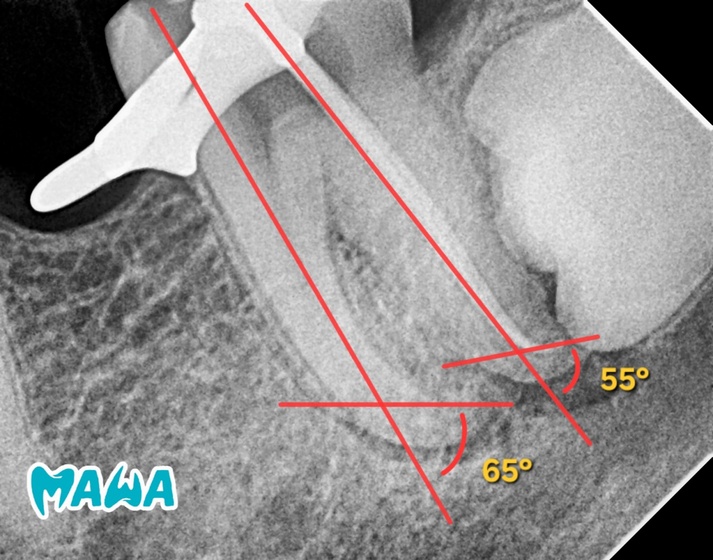
Understanding Curvature Classification with the Schneider Angle
Accurate preoperative planning is essential for predictable outcomes. One reliable radiographic method to evaluate canal curvature before treatment begins is the Schneider angle. This measurement helps clinicians anticipate the complexity of the case and select an appropriate instrumentation strategy, thereby reducing the likelihood of accidents.
According to the Schneider classification:
- Mild curvature: 5° to 10°
- Moderate curvature: 10° to 20°
- Severe curvature: 25° or greater
Identifying the degree of curvature early allows for better case selection and safer execution of the root canal treatment.
Case Overview
Tooth: #37 (lower left second molar)
Diagnosis: Pulp necrosis with symptomatic chronic apical periodontitis
Challenge: Severe curvatures (≥25° according to the Schneider classification)
Difficulty: Advanced
The presence of severe curvatures required a careful, stepwise approach that prioritized safety and anatomical respect throughout the procedure.
Clinical Workflow
The treatment followed a structured sequence designed to create a safe glide path and achieve controlled shaping:
- Diagnosis
Preoperative radiographs combined with Schneider angle measurement enabled accurate assessment of curvature severity and supported thorough treatment planning. - Access
A conventional access cavity was prepared to provide adequate visualization and straight-line entry to the canal system. - Glide Path
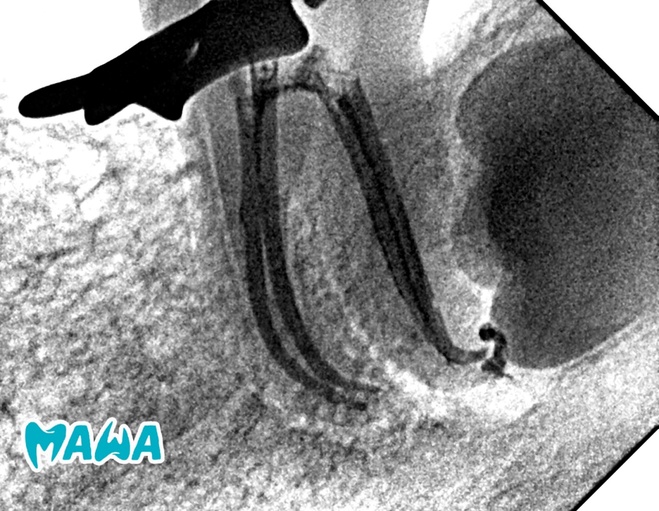
The Ino Shaper sequence includes a dedicated Glider file (15/.03). This instrument facilitated a safe path to working length and prepared the canal for subsequent instruments without forcing the anatomy. - Instrumentation
Shaping was performed with continuous rotation using the Ino Shaper system, progressing to a final apical size of 30/.04. The system allowed controlled preparation even in the presence of severe curvatures. - Irrigation
A standard disinfection protocol was applied to support thorough cleaning of the canal system. - Obturation
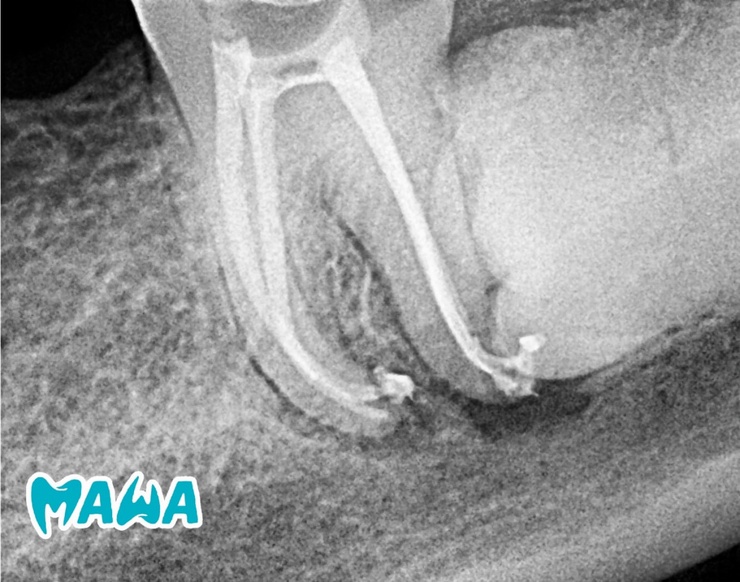
The canals were filled using a thermoplastic technique in combination with AH-Plus sealer, achieving a dense and adaptive seal.
Clinical Tips for Managing Severe Curvatures
- Always classify the degree of curvature before beginning instrumentation using the Schneider method (mild 5–10°, moderate 10–20°, severe ≥25°).
- The Glider 15/.03 creates a secure initial path without compromising canal anatomy.
- In cases of severe curvature, the Ino Shaper system supports progressive shaping up to 30/.04 while maintaining control and respecting the original canal pathway.
Conclusion
Severe canal curvatures demand careful diagnosis, appropriate instrument selection, and a disciplined clinical sequence. By combining Schneider angle assessment with the continuous-rotation Ino Shaper system—including its Glider file—clinicians can approach complex anatomy with greater predictability and safety.
This case on tooth #37 illustrates how thoughtful preoperative planning and the use of dedicated rotary instruments can help manage advanced endodontic challenges while preserving tooth structure and achieving a high-quality obturation.
For clinicians seeking reliable tools for curved canal management, systems designed for controlled continuous rotation, such as Ino Shaper, continue to support safer and more efficient root canal treatment outcomes.
