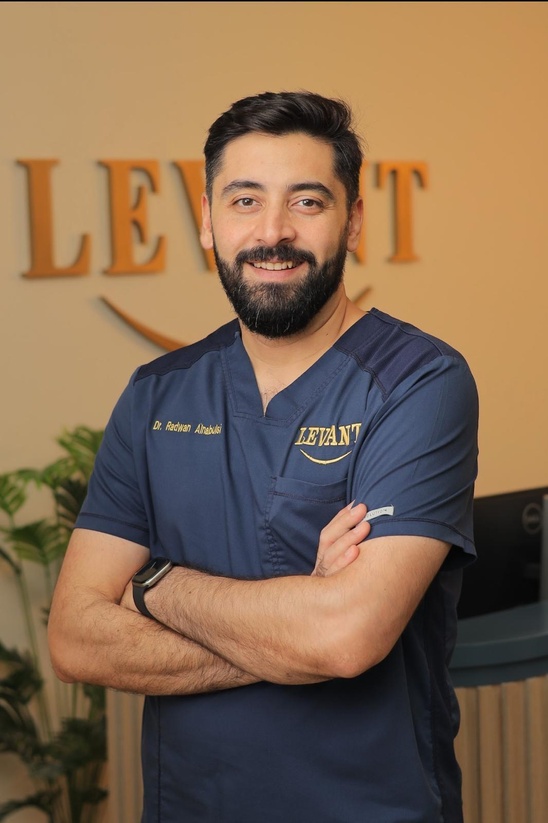
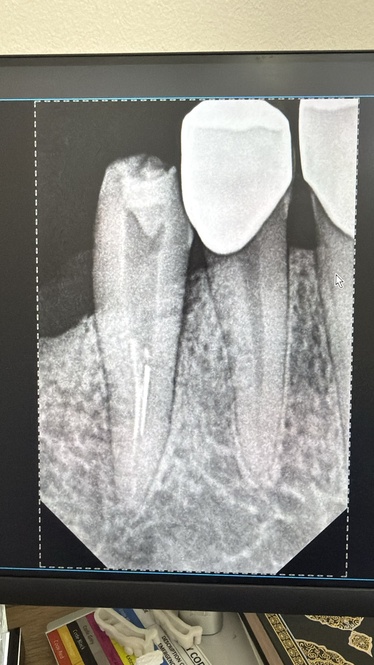
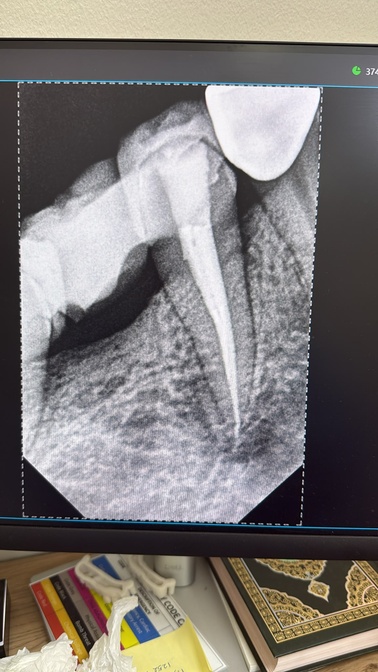
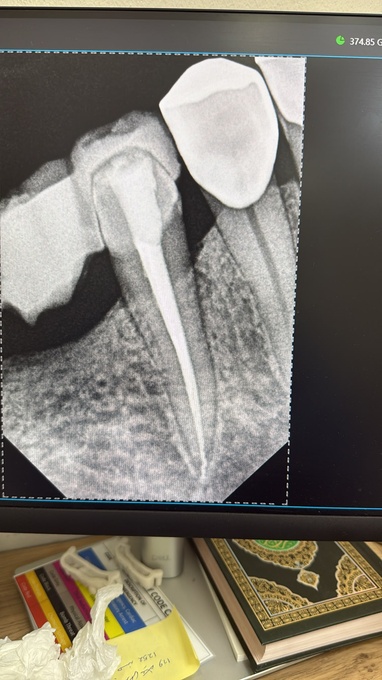
Separated instruments remain one of the more demanding complications in endodontics. When fragments cannot be retrieved, careful bypass and canal relocation become critical to allow continued cleaning and shaping. This referred clinical case, performed by Dr. Radwan Alnabelsi in Bahrain, demonstrates successful management of a lower right second premolar (#45) containing two separated instruments through bypass, canal relocation, and subsequent full instrumentation.
Case Difficulty
Advanced – Two separated instruments requiring careful bypass and canal relocation before complete mechanical preparation.
Case Details
- Tooth: Mandibular right second premolar (#45)
- Diagnosis: Not specified
- Challenge: Bypass of two separated instruments followed by canal relocation to enable thorough cleaning and shaping of the root canal system.
Clinical Workflow
1. Instrument Bypass
Two separated instruments were carefully bypassed using the Rogin D-Finder manual path file. This step restored access beyond the fragments and established a negotiable pathway.
2. Canal Relocation
After successful bypass, the canal was relocated to create a continuous and accessible path for subsequent instrumentation.
3. Working Length Determination
Working length was established using the AirPex electronic apex locator, ensuring accurate length control throughout the remainder of the procedure.
4. Mechanical Preparation
Full canal instrumentation was completed with Super Flexi heat-treated files. Their flexibility supported safe preparation after the canal pathway had been re-established.
5. Irrigation Protocol
A sequential irrigation regimen was applied:
- Sodium hypochlorite for tissue dissolution and disinfection
- Saline
- EDTA for smear layer removal
- Final saline rinse
6. Activation
Irrigation was activated using the Ultra-X device to improve irrigant penetration and enhance cleaning effectiveness around and beyond the bypassed fragments.
Clinical Tips for Managing Separated Instruments
- Use a dedicated manual pathfinding file such as the Rogin D-Finder to carefully bypass separated instruments while minimizing further damage.
- Confirm and stabilize the canal pathway after bypass before progressing to rotary instrumentation.
- Maintain accurate working length control with an electronic apex locator (AirPex) throughout the procedure.
- Select flexible Super Flexi files for final mechanical preparation once the canal has been relocated.
- Apply passive ultrasonic activation (Ultra-X) during irrigation to improve cleaning in compromised canal systems.
Key Takeaways
Successful management of separated instruments depends on careful bypass technique, canal relocation, precise length control, flexible instrumentation, and activated irrigation. This case by Dr. Radwan Alnabelsi illustrates how a systematic approach using pathfinding files, heat-treated NiTi instruments, and ultrasonic activation can restore the possibility of thorough canal preparation even in complex retreatment situations.
Patience, respect for the remaining canal anatomy, and methodical technique remain essential when dealing with instrument separation.
