
Dr.Haider Ali
Root canal treatment remains one of the most effective ways to save a natural tooth affected by deep caries and pulp inflammation. In this clinical case study, Dr. Haider Ali from Pakistan shares a detailed account of managing a 23-year-old female patient presenting with pain in the left lower jaw. This intermediate difficulty case highlights the successful execution of single-visit root canal treatment for tooth #46 (mandibular first molar).
Patient Presentation and Chief Complaint
The patient reported pain localized to the left lower jaw. Initially, the discomfort was triggered specifically by chewing and consumption of hot or cold foods/drinks. Such symptoms are classic indicators of pulp involvement and warrant prompt endodontic evaluation.
Clinical and Radiographic Examination
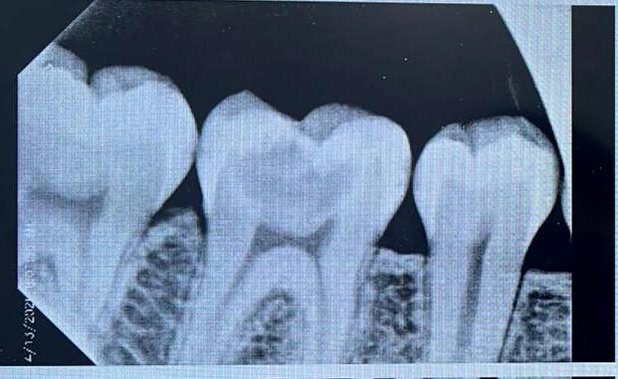
Intraoral examination revealed a Class I carious lesion on the mandibular first molar (#46).
Vitality testing showed:
- Cold test: Positive (lingering pain response)
- Tooth Tender to Percussion (TTP): Positive
Periodontal probing around the tooth averaged 2-3 mm, indicating healthy periodontal support with no significant attachment loss.
Radiographic evaluation (IOPA) confirmed that the caries had extended deep into the pulp chamber, explaining the symptomatic presentation.
Pulpal and Periapical Diagnosis
Based on the clinical and radiographic findings, the diagnoses were:
- Pulpal Diagnosis: Symptomatic Irreversible Pulpitis
- Periodontal/Apical Diagnosis: Symptomatic Apical Periodontitis
These conditions typically require root canal treatment to eliminate the inflamed or infected pulp tissue and prevent further spread of infection.
Treatment Approach: Single-Visit Root Canal Treatment
Given the case details and successful achievement of patency, Dr. Haider Ali opted for single-visit root canal treatment. Single-visit protocols are efficient when the canal system can be adequately cleaned, shaped, and disinfected in one appointment, reducing patient visits and postoperative complications.
Step-by-Step Clinical Workflow
- Access and Patency: Straight-line access was achieved, and patency was confirmed.
- Glide Path Creation: A glide path was established using Rogin R-Shaper.
- Canal Instrumentation: Cleaning and shaping were performed using Rogin Sub Taper Blue rotary files up to F2.
- Irrigation Protocol: Thorough disinfection was accomplished with:
- 5% NaOCl (Sodium Hypochlorite)
- Saline
- 17% EDTA (Ethylenediaminetetraacetic acid)
- All irrigants were activated using Rogin Ultra Max for enhanced penetration and debris removal.
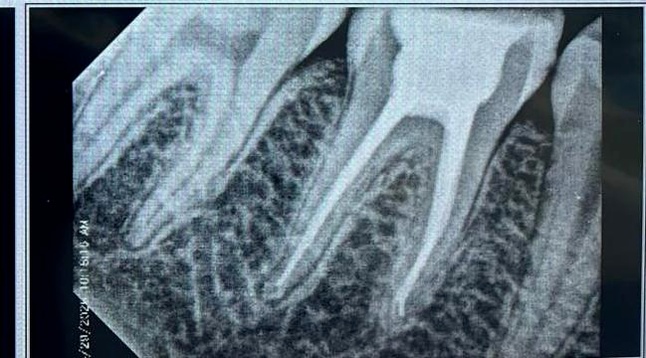
5.Obturation: The canals were obturated using Rogin EliteFill G (gutta-percha) and EliteFill P (sealer).
6.Coronal Restoration: A composite core build-up was placed immediately to restore structural integrity.
The entire procedure was completed in a single visit, demonstrating efficient endodontic management.
Clinical Tips for Similar Cases
- Positive Cold Test and TTP together strongly confirm pulpitis with apical involvement, guiding accurate diagnosis before treatment.
- Single-visit RCT is a viable and predictable option when patency is achieved early and bleeding is well controlled.
- Ultrasonic activation of irrigants (such as with Rogin Ultra Max) significantly improves disinfection, especially in single-visit protocols where time is limited.
Rogin rotary files and activation systems proved reliable in achieving proper glide path, shaping, and cleaning in this intermediate case.
Why Timely Root Canal Treatment Matters
Untreated symptomatic irreversible pulpitis can progress to acute apical abscess or chronic infection. This case exemplifies how prompt diagnosis, modern rotary instrumentation, and effective irrigation protocols can preserve the natural tooth with minimal discomfort to the patient.
Dr. Haider Ali’s approach underscores the importance of precise diagnosis, advanced materials, and efficient techniques in contemporary endodontics.
