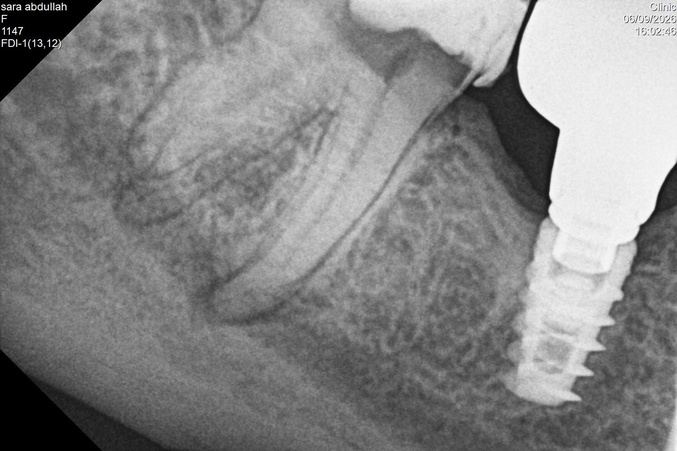
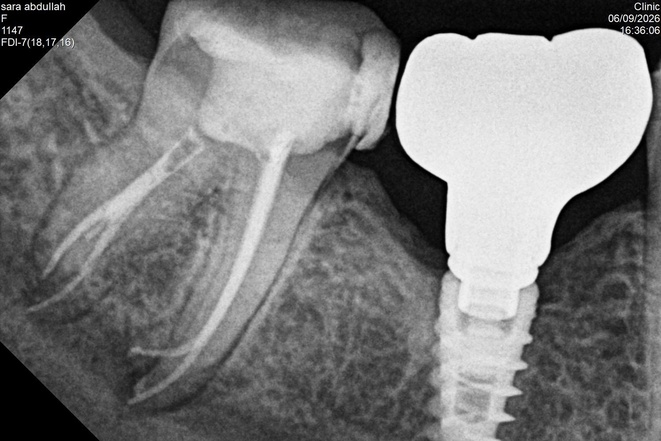
Complex root anatomy presents one of the greatest challenges in endodontics. Mandibular second molars typically have two or three roots, but the presence of four distinct roots significantly increases the difficulty of locating, negotiating, and thoroughly cleaning the canal system. This clinical case, performed by Dr. Radwan Alnabelsi in Bahrain, demonstrates a successful root canal treatment of a lower second molar (#47) with four roots.

Case Difficulty
Advanced – Four-root mandibular second molar requiring precise anatomical identification and careful preservation of the original canal morphology.
Case Details
- Tooth: Mandibular second molar (#47)
- Diagnosis: Symptomatic irreversible pulpitis (SIP)
- Referral: The case was referred specifically for management of the complex four-root anatomy.
- Primary Challenge: Accurate identification and preservation of the intricate canal structure while achieving complete cleaning and shaping.
Clinical Workflow
1. Working Length Determination
Working length was established using the AirPex electronic apex locator, ensuring precise control throughout the procedure and minimizing the risk of over-instrumentation in the complex root system.
2. Mechanical Preparation
Canal preparation was performed with Rogen Super Flexi (Aurora) heat-treated nickel-titanium files. These files offer enhanced flexibility and fatigue resistance, allowing safe negotiation of the curved and irregular canals associated with four-rooted mandibular second molars while preserving the original canal anatomy.
3. Irrigation Protocol
A thorough irrigation sequence was carried out using:
- Sodium hypochlorite for tissue dissolution and disinfection
- Saline
- EDTA for smear layer removal
- Final saline rinse
4. Activation
Passive ultrasonic activation was performed with the Ultra-X device. This step improves the penetration and effectiveness of irrigants into the complex canal network, supporting better debridement in anatomically challenging teeth.
Clinical Tips for Managing Four-Rooted Mandibular Second Molars
- Carefully map and respect the complex root anatomy to avoid transportation or stripping of the original canal structure.
- Select heat-treated files such as Rogen Super Flexi (Aurora) for their superior flexibility when preparing challenging or curved canals.
- Incorporate passive ultrasonic activation (e.g., Ultra-X) to enhance irrigant efficacy in intricate root canal systems.
- Maintain continuous and accurate working length control at every stage of preparation.
Key Takeaways
Successful management of a four-rooted mandibular second molar depends on precise diagnosis of the anatomy, reliable working length determination, flexible heat-treated instrumentation, and enhanced irrigation techniques. This case by Dr. Radwan Alnabelsi illustrates how the combination of modern heat-treated NiTi files and activated irrigation can help clinicians achieve predictable outcomes even in advanced anatomical situations.
Proper case selection, systematic workflow, and attention to detail remain essential when treating teeth with unusual root morphology.
