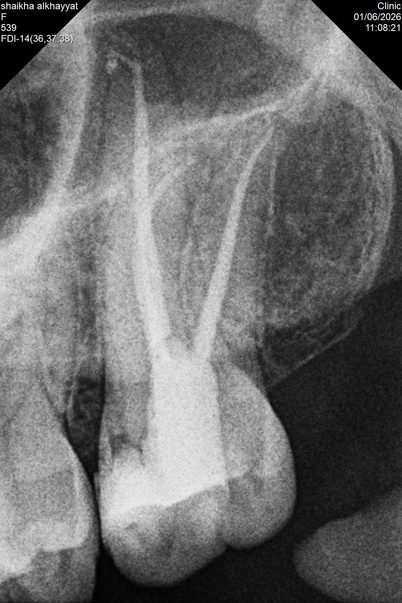
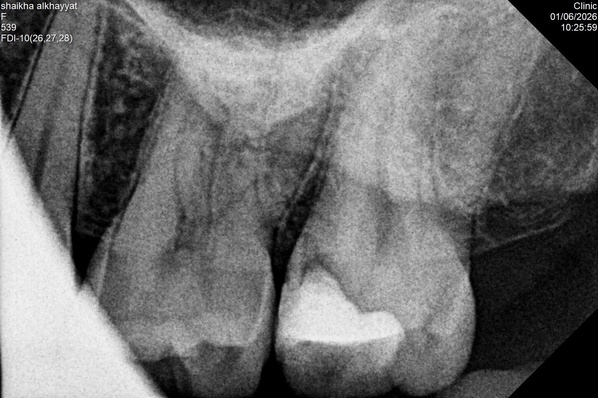
Accurate diagnosis and controlled instrumentation remain essential for predictable outcomes in everyday endodontics. Maxillary second molars often present moderate anatomical variation, making precise working length control and thorough canal cleaning critical for success. This clinical case, performed by Dr. Radwan Alnabelsi in Bahrain, illustrates a standard yet carefully executed root canal treatment of tooth #27 diagnosed with symptomatic irreversible pulpitis.

Case Difficulty
Standard – Routine root canal treatment requiring accurate working length determination and effective canal debridement.
Case Details
- Tooth: Maxillary second molar (#27)
- Diagnosis: Symptomatic irreversible pulpitis (SIP)
- Challenge: Achieving precise working length control throughout preparation while ensuring thorough cleaning of the root canal system.
Clinical Workflow
1. Working Length Determination
Working length was established using the AirPex electronic apex locator. Consistent length control helps prevent over-instrumentation and supports a more predictable final preparation.
2. Mechanical Preparation
Canal shaping was performed with Rogen EZ-Shaper® heat-treated nickel-titanium files. These files offer improved flexibility and cutting efficiency, allowing safe and progressive preparation while respecting the natural canal anatomy.
3. Irrigation Protocol
A sequential irrigation regimen was applied:
- Sodium hypochlorite for tissue dissolution and disinfection
- Saline
- EDTA for smear layer removal
- Final saline rinse
4. Activation
Passive ultrasonic activation was carried out with the Ultra-X device. This step enhances the distribution and effectiveness of irrigants within the canal system, contributing to improved cleaning.
Clinical Tips for Routine Maxillary Molar Root Canal Treatment
- Maintain continuous and accurate working length control during the entire preparation process.
- Utilize heat-treated files such as Rogen EZ-Shaper® to benefit from enhanced flexibility and reduced risk of procedural errors.
- Follow a systematic irrigation sequence (sodium hypochlorite → saline → EDTA → saline) to optimize canal cleanliness.
- Incorporate passive ultrasonic activation (Ultra-X) to improve irrigant performance and support more thorough debridement.
Key Takeaways
Even in standard cases of symptomatic irreversible pulpitis, attention to detail in working length determination, flexible heat-treated instrumentation, and activated irrigation protocols contributes significantly to treatment quality. This case by Dr. Radwan Alnabelsi demonstrates how a structured approach using modern heat-treated NiTi files and ultrasonic activation can support reliable outcomes in everyday maxillary second molar root canal treatment.
Consistent technique, appropriate instrument selection, and thorough irrigation remain the foundation of successful endodontic therapy.
